Compare Products With Clarity

A neutral framework for placing food products side by side across meaningful criteria, supporting informed and conscious selection.

How Comparison Supports Awareness

Comparing products across structured criteria removes guesswork and helps you see meaningful differences that may not be obvious at first glance.

Our comparison framework uses consistent categories to present product information neutrally, allowing you to weigh factors according to your own priorities and awareness.

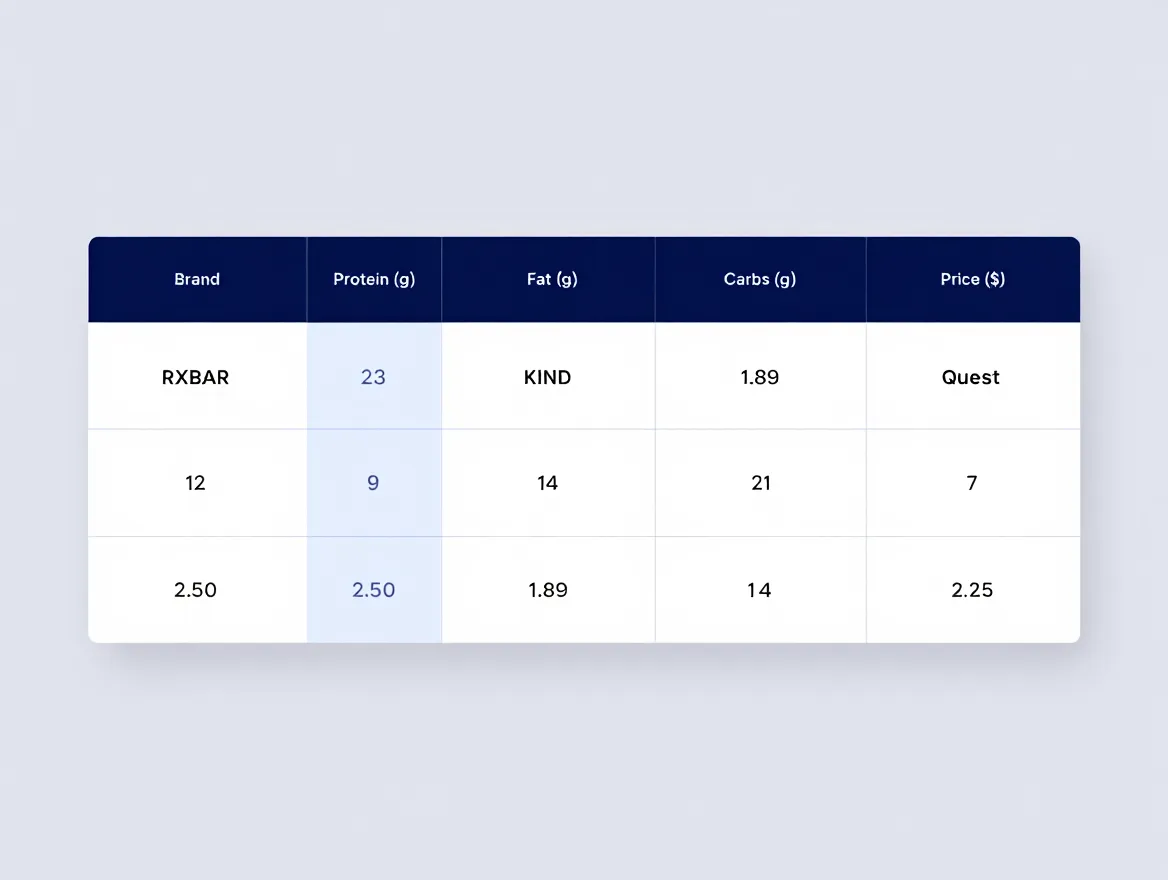
Structured comparison table layout showing organized rows of food product data for neutral evaluation

What We Compare

A sample comparison framework showing key criteria used to evaluate food products side by side.

Criteria What to Look For Why It Matters
Ingredient Count Total number of listed ingredients Fewer ingredients may indicate simpler composition
Primary Ingredient First item in the ingredient list Represents the largest proportion of the product
Added Sugars Grams per serving and type of sweetener Helps assess sweetness sources and quantity
Protein Content Grams per serving Relevant for dietary balance considerations
Sodium Level Milligrams per serving An important factor for many dietary patterns
Certifications Organic, non-GMO, fair trade, etc. May reflect sourcing and production standards

Deeper Comparison Perspectives

Beyond basic nutrition, these perspectives can enrich your comparison process.

Ingredient Quality

Compare the types and sources of ingredients used. Whole, recognizable ingredients may differ significantly from processed alternatives.

  • Whole vs. refined ingredients
  • Natural vs. artificial additives
  • Single-source vs. blended components

Nutritional Density

Evaluate how much nutritional value each product provides relative to its caloric content.

  • Vitamins and minerals per serving
  • Fiber content relative to carbohydrates
  • Protein-to-calorie ratio

Transparency

Assess how openly each product communicates its contents, sourcing, and production methods.

  • Completeness of ingredient disclosure
  • Availability of sourcing information
  • Clarity of nutritional labeling

Contextual Fit

Consider how each product fits within your personal dietary pattern and lifestyle context.

  • Alignment with dietary preferences
  • Allergen considerations
  • Practical factors like shelf life and preparation

Disclaimer

All content on this site is educational and informational only. It is not medical, nutritional, or dietary advice and does not constitute medical diagnosis, treatment, or recommendation. Before making dietary or health-related decisions, especially if you have chronic conditions, consult a qualified healthcare professional.