Ingredient List Review
Examine the full list of ingredients, noting the order (by quantity), any unfamiliar additives, and potential allergens that may be present.
A structured framework for reviewing food product information, ingredients, and nutritional data with clarity and awareness.
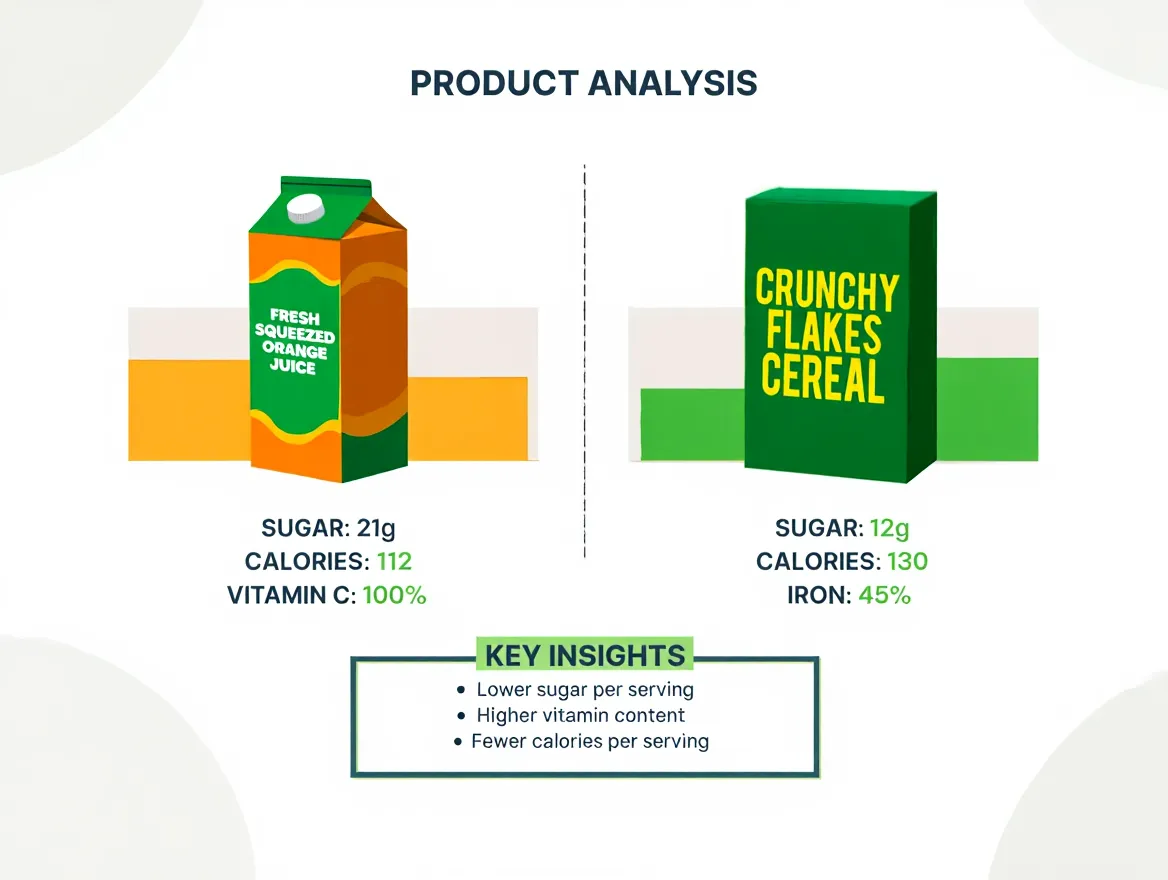
Product analysis involves systematically reviewing the available information about a food item, from its ingredient list to its nutritional profile and sourcing details.
By breaking down each component, you can form a clearer understanding of what a product offers and how it aligns with your personal criteria and dietary considerations.
Six primary areas to examine when reviewing a food product for conscious selection.
Examine the full list of ingredients, noting the order (by quantity), any unfamiliar additives, and potential allergens that may be present.
Review macronutrients (protein, fats, carbohydrates) and micronutrients (vitamins, minerals) per serving to understand the product's nutritional contribution.
Consider whether the product is minimally processed, moderately processed, or highly processed. Processing level can influence nutritional value and ingredient complexity.
Look into where the primary ingredients are sourced, how they are grown or produced, and any relevant certifications the product may carry.
Evaluate marketing claims on the label (such as "natural" or "wholesome") by comparing them against the actual ingredient list and nutritional data.
Consider how this product fits within your overall dietary pattern, personal preferences, and any specific nutritional considerations you may have.
A sequential approach to analyzing any food product with awareness and structure.
Read the ingredient list from first to last. Ingredients are listed by quantity, so the first items make up the largest portion of the product.
Review the nutritional information per serving. Pay attention to serving size, as it can vary between similar products and affect comparability.
Identify any preservatives, colorings, flavorings, or stabilizers. Understanding their purpose can help you assess the product's composition.
Compare any front-of-package claims against the actual data in the nutrition facts and ingredient list. Labels can sometimes be more marketing than substance.
Apply your personal priorities — whether they relate to allergens, dietary patterns, sourcing preferences, or nutritional goals — as the final filter in your analysis.
All content on this site is educational and informational only. It is not medical, nutritional, or dietary advice and does not constitute medical diagnosis, treatment, or recommendation. Before making dietary or health-related decisions, especially if you have chronic conditions, consult a qualified healthcare professional.